Wednesday, 11 September 2013

Nha Trang Divin - Hon Mun Island, Vietnam


Nha Trang is the most famous dive location in Vietnam.  I went diving with Rainbow Divers Nha Trang, the best known dive centre and most well established of the Rainbow Divers centres.


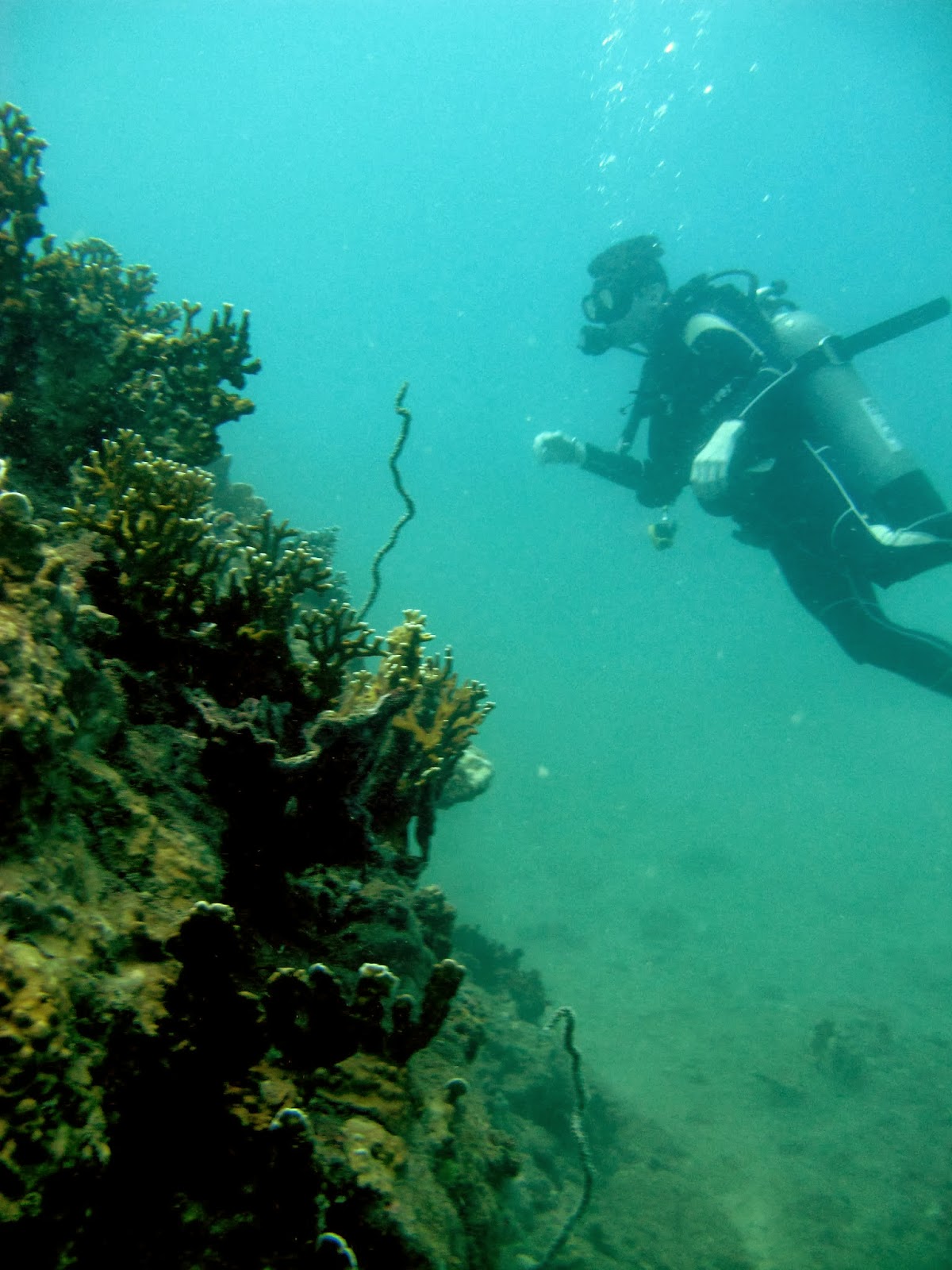
Diving regularly take place around the island of Hon Mun which was declared a 'protected' Marine Park in 2003.  Hon Mun is located to the south of Nha Trang Bay and is characterised by cliffs, caves and numerous grottoes.


The island's excellent diving is largely due to its close proximity to warm sea-currents from the equator which are particularly favourable to the development of soft and hard corals whilst offering the ideal environment to an abundance of tropical sea creatures.




Lionfish - Nha Trang, Vietnam


Lionfish are native to the warm, tropical waters of the South Pacific and Indian Oceans


Mantis Shrimp - Nha Trang, Vietnam

Mantis shrimp are marine crustaceans that reach 30 centimetres in length and in rare cases have been recorded at up to 38 cm. The carapace of mantis shrimp covers only the rear part of the head and the first four segments of the thorax. Mantis shrimp appear in a variety of colours, from shades of browns to bright neon colours. 

Although they are common animals and among the most important predators in many shallow, tropical and sub-tropical marine habitats, they are poorly understood as many species spend most of their life tucked away in burrows and holes.  This one was spotted by the dive guide and 'enticed' out of its hideout.


 Check out this funny video for some facts (and fiction!) about the Mantis Shrimp:


Starfish - Nha Trang, Vietnam


Leatherjacket - Nha Trang, Vietnam


Nudibranchs - Nha Trang, Vietnam


Hard Coral, Nha Trang - Hon Mun Island, Vietnam


Hard corals are the reef builders. The hard coral polyp, such as those in Brain Coral, secrete a limestone skeleton cup around itself and live inside it for protection. When a polyp dies, its skeleton house remains intact.  The name "hard coral" derives from the skeleton which forms around the polyp.