Sunday, 17 April 2022

"1ª Ensenada" and "2ª Ensenada", Dénia - Spain

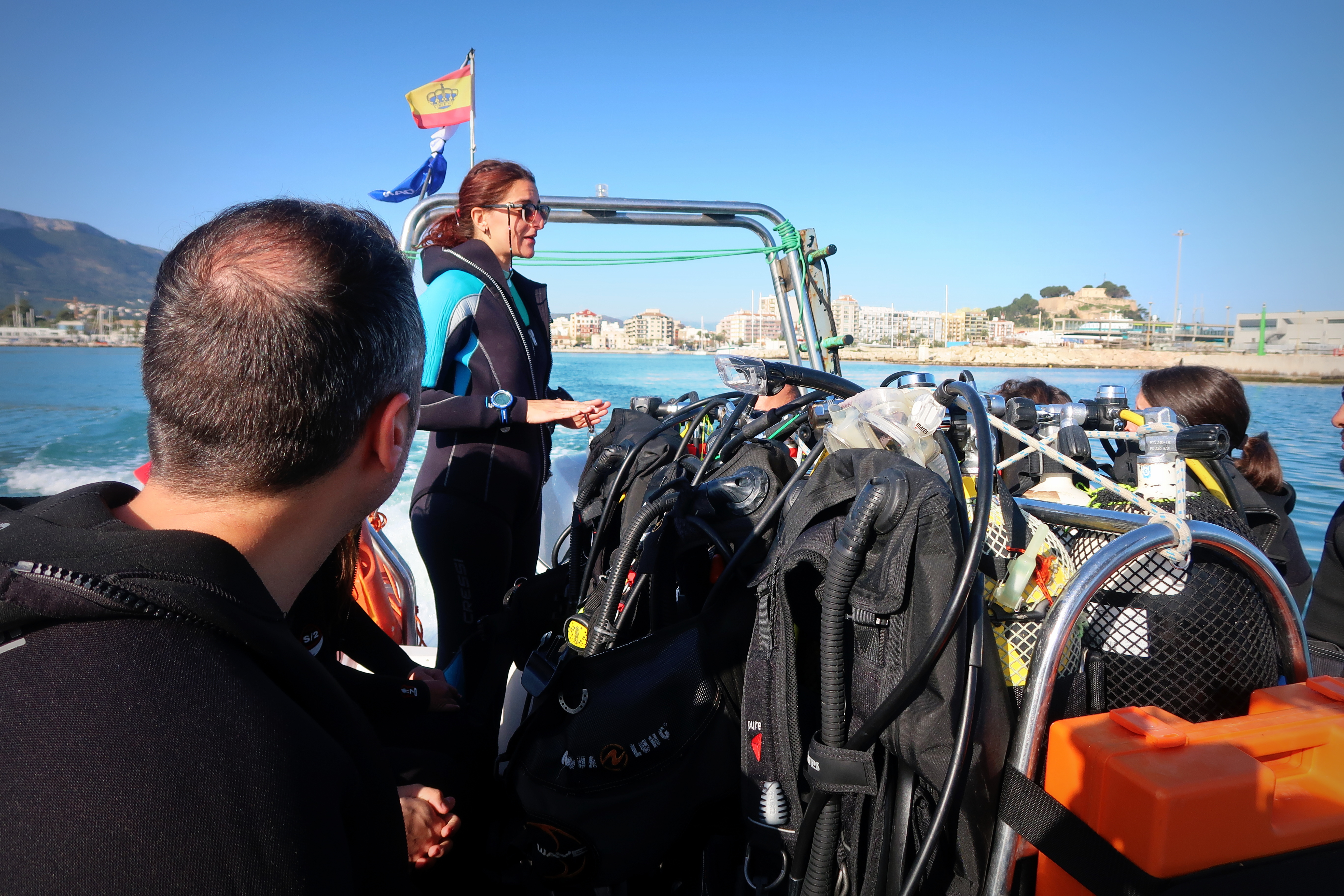
Denia Port

Punta negra bay between Torre del Gerro on left and Montgó mountain

First dive of 2022.  Had hoped to do a good few more but weather wasn't great all week.  This subsequently affected the viz - not great so not many photos! Wore the 3mm for dives - Ok for first dive but a bit chilly at end of second. Dived with Mon Diving Centre.


1ª Ensenada

Entry: 10:10am
Dive time: 45min
Depth: 18.6m
Temp: 15 degrees C
Weights: 8kg (overweighted 6kg better)
Insulation: 3mm wet suit 

Journey out 


Highlight was a Moray eel between the crevices.

 2ª Ensenada

 
Entry: 11:33am
Dive time: 41min
Depth: 15.5m
Temp: 15 degrees C 
Weights: 8kg (overweighted 6kg better)
Insultaion: 3mm wet suit


Sea anemone (Anemonia sulcata)

Sea anemones can be a nice underwater watch.  They get their name from flowering plants but are actually predatory animals.  Sea anemones are a popular dish in Spain. It is known as ortiguillas, 'little nettles' or ortiga de mar, 'sea nettle'. To neutralize the poison, they are marinated in water with vinegar.

Anemones can reproduce either asexually or sexually, with each method offering distinct advantages and disadvantages. 

With asexual reproduction, the offspring are genetically identical to the original parent. Asexual reproduction allows for larger numbers of individual offspring to be produced more quickly with less energy expenditure as compared to sexual reproduction; in stable marine environments this is a reliable, efficient and effective means of reproduction. However, this lack of genetic diversity in offspring could collapse an entire population of genetically identical animals if environmental pressures were to swing too far from tolerable conditions. On the other hand, rapid rates of asexual reproduction allows for faster responses to environmental pressures as they are occurring and could raise the rate of survival if individual offspring develop genetic mutations during mitosis.

During sexual reproduction, sea anemones release genetic material (gametes) through the oral disk. With many species of sea anemones, genetic material from two or more distinct species are released into the water whereby sperm and egg will connect with the possibility of producing a genetically different and unique offspring from both parents. The genetic differences among multiple offspring increases the probability of survival.

Saturday, 10 July 2021

Karslruhe II, Scapa Flow, Orkney - Scotland


Entry: 11:33
Dive time: 42min
Depth: 25.3m
Temp: 12 degrees C
Weights: 12kg 
Air: Nitrox 32
Scapa2#11
Buddy: Jo

 http://www.scapaflowwrecks.com/wrecks/karlsruhe/diving.php

Third dive back at the Karlsruhe and we definitely found it again - two out of three times! (",)

This was a surprise dive as the MV Karin had problems yesterday and we thought we had done our last dive.  An engineer came to look at the engine, presumed gearbox problem, sorted it out and the captain was keen to test how it sailed..  We were given the option of doing another dive and most were keen.


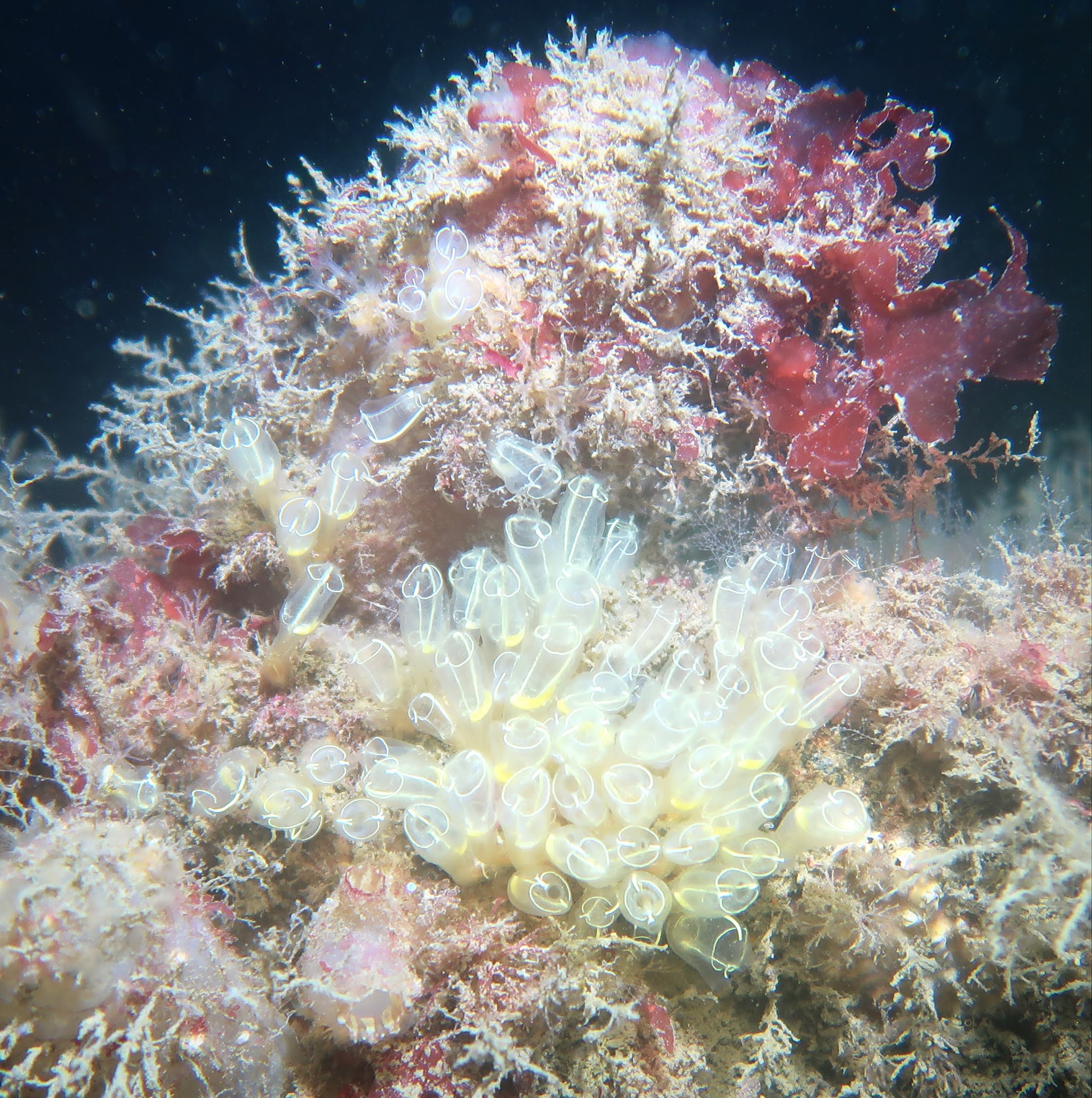
Sea squirt


Wreck info from Scap Flow Wreck.com:

Nationality: German
Launched: 31 January 1916
Commissioned: 15 November 1916
Builder: Kaiserliche Werft, Kiel (Imperial Dockyard Kiel)
Construction number: 41
Type: Light Cruiser
Subtype/class: Königsberg class
Displacement (standard): 5440 tonnes
Displacement (full load): 7125 tonnes
Length overall: 112m*
Beam: 12m
Draught: 6.32 - 5.96m
Complement: 475 men
Material: Steel
Cause of loss: Scuttled
Date lost: 21 June 1919; 1550 hrs
Casualties (in scuttling): 0
Propulsion: Ten coal-fired and two oil-fired doubled ended marine type boilers, two sets
marine type turbines (high pressure turbines worked by geared transmission),
two propellers
Fuel: 1340 tonnes coal, 500 tonnes oil
Range: 4850 nautical miles at 12 knots
Power: 55700 shp** maximum
Speed: 27.7 knots maximum
Armour: ranges from 20mm – 60mm (position dependent),
control tower 100mm (on the sides)
Armament: 8 x 15cm guns, 2 x 8.8cm guns, 2 x 50cm deck mounted torpedo tubes, 2 x
50cm lateral submerged torpedo tubes, 200 deck-mounted mines


Friday, 9 July 2021

Wall at Copinsay, Orkney - Scotland


Entry: 13:48
Dive time: 42min
Depth: 24.4m
Temp: 11 degrees C
Weights: 12kg 
Air: Nitrox 27
Scapa2#10


Thursday, 8 July 2021

Endeavor, Orkney - Scotland

Entry: 16:26
Dive time: 35min
Depth: 21m
Temp: 12 degrees C
Weights: 12kg 
Air: Nitrox 32
Scapa2#9
 
The Endeavour was a trawler which sank in 1918 near Kirkwall.  The tides were really very strong and a number of divers really struggled to find the wreck.  We stayed really low having carefully followed the shot line down.  We spotted the wreck to our left and quickly made our way over.  We did three circles of the wreckIt now lies at 27m.


Disperser, Orkney - Scotland

Entry: 10:24
Dive time: 39min
Depth: 25m
Temp: 12 degrees C
Weights: 12kg 
Air: Nitrox 25
Scapa2#8


Tuesday, 6 July 2021

Roy's Cave, Orkney - Scotland


Entry: 13:08
Dive time: 50min
Depth: 16.8m
Temp: 11 degrees C
Weights: 12kg 
Air: Nitrox 31
Scapa2#7